
“At this stage, the body can still repair itself”: Plants can help with very specific health problems

A few months ago I had the opportunity to fly to Tuscany to discover Aboca. Founded in 1978 in the small town of Sansepolcro, south of Florence, the Italian company specializes in natural health and is now represented in 24 countries and 50,000 pharmacies around the world.
Aboca was born out of a desire to offer something “natural alternative to treating people”explains Stéphane Rullier, pharmacist, during the visit to the headquarters, a magnificent traditional building surrounded by cypress trees, symbolic of the region. “We were in the 70s, when chemistry was at the heart of the profession. Valentino Mercati, the founder of Aboca, wanted to bring something that complemented conventional medicine. We did a lot of research to combine scientific innovation with naturalness.”
This innovation was “possible to be biodegradable via natural plant complexes”. The idea here is to make a suggestion “Immediately effective products that do not harm the body. We take a physiological approach.”
“We copy what Mother Nature does when the body is functioning well.”
That means? “When we have a sore throat, it means that the balance of our mucous membrane is no longer perfect. Homeostasis is blocked. The aim is to bring the physiological pathways back into balance: we are not acting on an important receptor mechanism. At the level of certain biofunctions, we copy what Mother Nature does when our body is functioning well.”explains Stephane.
While a traditional medicine attempts to block the natural defense reflex of coughing, an Aboca medical device attempts to do this “Restores the mucous membrane’s intrinsic properties without blocking the mechanism”. “We restore homeostasis and restore the intrinsic properties of the mucous membranes”summarizes the expert.
This does not create any imbalance. “Because if we act on one receptor, it will be at the expense of something else.” In other words: There is no risk of side effects here.
Medical devices in three major therapeutic areas
Therefore, the products offered by Aboca are not medicines, but medical devices: their main action is not based on a chemical substance or a pharmacological action.
“For medical devices, we are obliged to apply for certification. This is done via an external organization that proves the effectiveness and safety of our products.explains Stephane. This certification is valid throughout Europe and is noted on our boxes. »
As for the ranges offered, the Italian company is present in the areas of respiratory, gastrointestinal (polysaccharide complexes target cholesterol, triglycerides and blood sugar) and metabolism (by acting on the physiological regulation of the microbiota and metabolic parameters).
The challenge of large-scale herbal medicine
However, in order to be able to produce standardized and on a large scale, a purely phytotherapeutic approach had to be abandoned. There are currently 22 clinical studies and 80 collaborations underway. All for an investment of 9 million euros.
As for the tests, “We work a lot with hospitals and universities, especially in Italy”explains Stephane. “But we also have spontaneous studies with services that are interested in some of our products and have started a study with these products. This provides us with valuable data.”
This approach is accompanied by surveys to investigate the effectiveness and safety of products under real operating conditions.“This has not yet been implemented in France, but we are collecting data from consumers about their healthcare professionals.” This is called “real world evidence.”
What about the One Health policy?
As you have probably understood, the special feature of Aboca products lies in this synergy between phytotherapy and science. But what defines the DNA of the brand is, above all, its overall ecological approach, she assures. “We talk about the concept
“One Health” »explains Stephane. “For us, a product is not considered safe if it has negative effects on fauna and flora, as these negative effects come back to humans in the long term.”
If European politicians are currently starting to deal with the question of the CO2 impact of medicine, that is of course far from enough. In fact, a medicine can have an impact on the environment through its production (discharge of wastewater containing active substances or chemical solvents, significant water and energy consumption, local pollution around certain poorly controlled production sites), after consumption via residues that end up in rivers or in groundwater and finally in waste. If disposed of improperly, medications can also contaminate the soil, enter waterways, or be ingested by animals.
At Aboca, the products are 100% degradable and natural.
“The only preservatives you will find in our products are sugar, honey, fruit juice or pH stabilizers”assures Stéphane. And to specify: “We are 67% autonomous over our systems”. These are obviously grown on three organic farming sites.
For their part, the factories currently operate 95% thanks to renewable energy, while processes allow the facilities to be cleaned without detergents, thus reducing industrial water pollution.
Be part of the tradition
But Aboca goes even further in its approach, emphasizing educating the general public about medicinal plants and the importance of ecology. Hence a series of cultural initiatives such as the creation in 2002 of the Aboca Museum in Sansepolcro, the first museum in the world dedicated to the history of medicinal herbs. We will spend an afternoon there.
In a faithful reconstruction of the makers’ workshops over the centuries, visitors will discover centuries-old botanical books (the library is breathtaking), mortars, ceramic and distillation instruments, and glassware used in ancient herbalism.
But you don’t have to be a plant lover to be interested in the visit, as it takes place in the magnificent 17th century residence. History and architecture enthusiasts will also be thrilled!
In what specific cases should we prefer plants over medicines?
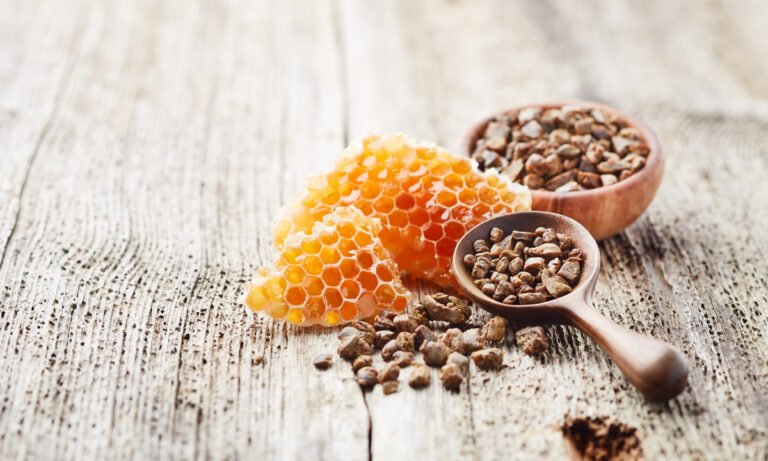
As you have probably understood, the use of herbal medicines can be more interesting than medication, be it as a preventive measure to support body functions or in the event of functional disorders. “These can be digestive, hormonal, metabolic, muscle-joint or skin problems,” explains Morgane Poirier, alternative practitioner, in an interview with TopSanté.fr. At this stage the body can still repair itself. » Specifically, plants can prove beneficial for minor everyday ailments such as a cold, viral tonsillitis, gastrointestinal problems, headaches, a mosquito bite or digestive problems after a hearty meal. Of course, the prerequisite is the approval of a specialist in order to avoid unfortunate interactions. To nourish your respiratory mucous membranes in the middle of winter, Morgane Poirier recommends bee products (unpasteurized local honey, brown or black propolis, fresh pollen) or herbal teas made from emollient, mucus-rich plants (marshmallow (Althaea officinalis), mallow (Malva syvestris), white broth (Verbascum thapsus), ribwort plantain (Plantago lanceolata or Major) or poppy (Papaver rhoeas…)). “These plants are also helpful for dry coughs to soften and protect irritated mucous membranes,” explains the expert. For wet coughs, expectorant plants such as horehound, licorice or climbing ivy can be helpful. But of course all of this is of little use if you don’t pay attention to a healthy lifestyle. Drink enough fluids, sleep, breathe through your nose, exercise, limit your consumption of alcohol and tobacco, and eat “a seasonal, colorful diet that is naturally rich in antioxidants,” explains Morgane, who advises “favoring plant-based foods (dandelions, leeks, artichokes, asparagus, garlic, onions, black radishes, endive, etc.)” all year round. For infusions, follow the rhythm of the seasons (thyme, savory, rosemary, bay leaf, oregano, ginger in winter and lemon peel, peppermint, rosemary, lemon balm and hibiscus in summer).